How Sony took Ramayana to the world, and why Varanasi should be watching
For decades, big Indian films have gone abroad country by country, through a different local distributor in each market. Ramayana went out through one Hollywood studio. Six days in, we look at the deal, the screens, the marketing and the money, and at what the same choice could mean for S.S. Rajamouli’s Varanasi.
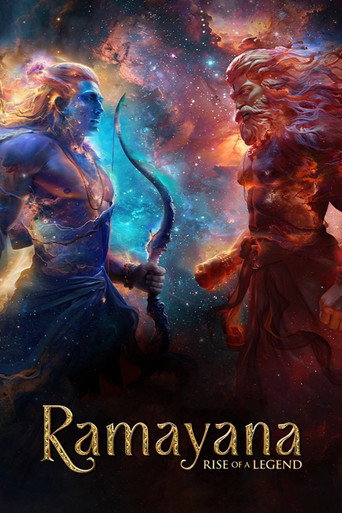
Eight things to know
- One release, one week, about 40 markets. Ramayana opened in North America, the UK, the Gulf, Australia, Europe and South-East Asia within days of India. More countries follow through November, from Indonesia to Brazil.
- Mainstream screens. 1,433 theatres in North America, the widest release ever for an Indian film and about 45% more than the 987 Dhurandhar 2 opened in. On Monday that reach paid off: about $1.18M, the best Monday ever for an Indian film there.
- Records where Indian films rarely travel. No. 1 in Thailand ($550K), and record openings in the UK, the Netherlands, South Africa and Vietnam.
- Sony did not buy the film. According to reports, Sony paid nothing up front for the rights. It is said to be spending about $25M on marketing, with the producers adding about $15M. Neither Sony nor Prime Focus has confirmed any of these figures.
- The money has a long way to go. Our worked example shows that, if Sony gets its marketing back before the producer is paid, the overseas run needs roughly $57M–$83M before Prime Focus earns anything from outside India. After six days it stands at about $27M.
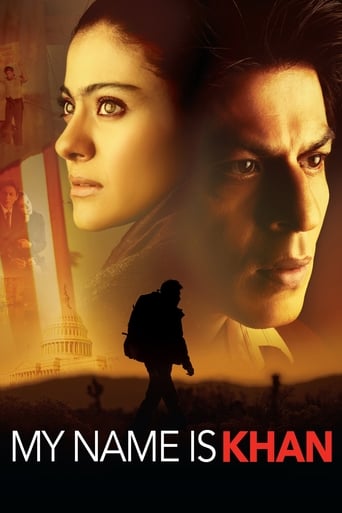
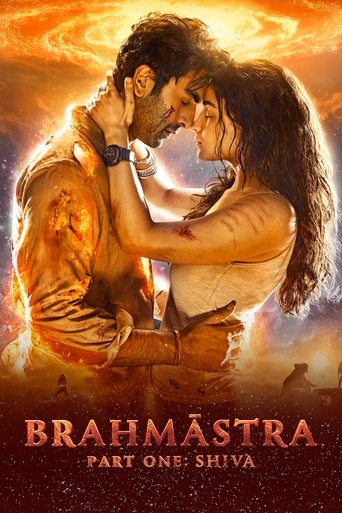
- Not the first Hollywood studio to release an Indian film. Fox did it with My Name Is Khan in 2010 and Disney with Brahmastra in 2022. What is new is the scale, and the fact that the producer is an independent Indian company rather than a studio’s own Indian arm.
- Premium formats and a crossover audience. $6M from IMAX worldwide. An English version took up to 13% of tickets in some US cities. But about 7 in 10 US viewers were Asian American, so the wider audience is there, just not big yet.
- Varanasi will face a sharper version of the same choice. If the reported ₹160 Cr ($16.8M) overseas offer is real, a Ramayana-style studio deal would only beat it if Varanasi grosses roughly $95M–$140M outside India (Boxoffy estimate).
How Indian films usually travel
A big Indian film normally sells its overseas rights market by market. One company buys North America, another the Gulf, another the UK, another Australia. Each one books its own cinemas, runs its own marketing and reports (or does not report) its own numbers.
The producer usually gets a fixed amount up front, called a minimum guarantee or “royalty”, and the buyer takes the risk. For Baahubali 2 in 2017, Great India Films said it paid over $7M for the North American rights in all languages. The producer had that money before a single ticket was sold.
This system works well for the diaspora. It is quick, local distributors know their audience, and the producer gets paid early. It also has limits, and they show up every time an Indian film tries to go bigger:
- Fewer and smaller screens. Local distributors book the cinemas they already work with, usually near Indian communities.
- Staggered releases. Some markets get the film weeks later, after piracy and reviews have already landed.
- Patchy numbers. Many markets never report, so a film’s worldwide total is pieced together from trade estimates.
- Little reach beyond the diaspora. No local buyer has the budget or the contacts to market a Telugu or Hindi film to non-Indian audiences in Bangkok or Florida.
What is confirmed, what is reported, and what is still unknown
Prime Focus Studios, the company of producer Namit Malhotra (it also owns the visual-effects house DNEG), announced on 24 July 2026 that Sony Pictures would release Ramayana in every territory outside India. In India, Dharma Productions handles the Hindi-speaking north. Malhotra called it his “dream of taking Ramayana to the world”. Neither side has published the terms.
A Hollywood studio usually takes on a film it did not make in one of three ways:
- Buy it. The studio pays the producer a fixed sum (a minimum guarantee) for the rights, spends on marketing, and keeps most of the upside. The producer is safe, but gives up most of the upside.
- Distribute it for a fee, studio pays for marketing. No big upfront payment. The studio puts up the marketing money, takes it back first from the film’s earnings, then keeps a distribution fee. The producer gets what is left.
- “Rent” the studio’s system. The producer pays for all the marketing and takes all the risk. The studio only books cinemas and collects money, for a smaller fee.
Going by the reports, Ramayana sits in the middle group, with the marketing costs shared.
| Point | What we found | Status |
|---|---|---|
| Who releases where | Sony: all territories outside India. Dharma: North India, Hindi markets. Produced by Prime Focus Studios with DNEG and Monster Mind Creations. | Official |
| Format | First Indian production with the “Filmed for IMAX” label. | Official |
| Upfront payment by Sony | None. Described as a “free of cost” distribution deal: no fee paid to the producer for the rights. | Reported |
| Marketing money | About $40M worldwide: Sony about $25M, the producers about $15M. | Reported |
| Overseas marketing and target | A post on social media claimed a $10M overseas marketing budget and a $65M overseas “target”. Not confirmed by anyone involved. | Unconfirmed |
| Budget | Malhotra says he has put ₹4,000 Cr (~$421M) into both films and “not borrowed a single rupee”. Trade press reports about $500M including marketing. Part One alone is reported at ₹1,400–1,500 Cr (~$147M–$158M) to make and release. | Reported |
| Sony’s fee (%) | Not disclosed anywhere we could find. | Unknown |
| Does Sony take back its marketing first? | Not disclosed. This is the single biggest unknown for the producer’s earnings. | Unknown |
| Part Two, streaming and TV outside India | Not disclosed. | Unknown |
With no money up front, Prime Focus carries the risk. If Ramayana does well abroad, it keeps far more than a flat sale would have paid. If it does not, there is no guaranteed cheque to fall back on. Prime Focus is a listed company with gross debt of ₹5,062 Cr ($533M) as of 31 March 2026, and has said it wants to reduce debt partly by earning from its content. That is one reason its share price now moves with the box office.
What one global distributor brought to Ramayana
1. Mainstream cinemas, not just Indian-friendly ones
In North America, Ramayana opened in 1,433 theatres, the widest release ever for an Indian film. On Diwali Sunday, our seat-by-seat count found AMC, Cinemark and Regal selling 78% of all US tickets, with chains like Harkins, Marcus and Emagine also playing it. Studio films get those screens because the big chains do business with the studio all year round.
| Film | Opening (North America) | Theatres |
|---|---|---|
| Dhurandhar 2 | $14.0M | 987 (Fri–Sun) |
| Ramayana | $12.4M | 1,433 |
| Kalki 2898 AD | $11.2M | not published |
The North America openings compared
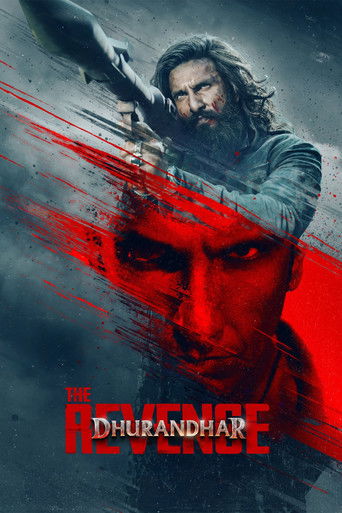
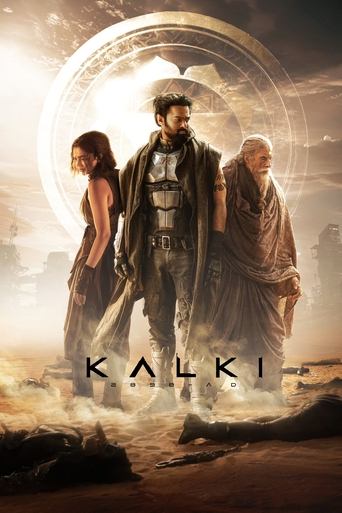
Dhurandhar 2 still has the bigger opening, and it earned more per theatre. Ramayana’s wider release spread the crowd thinner, but it reached towns where Indian films rarely play.
The wide release showed its value on the first working day. Ramayana took about $1.18M on Monday 9 November (our seat count, still rising late in the evening), beating Dhurandhar 2’s $1.14M, the previous best Monday for an Indian film in North America. Dhurandhar 2 did it in 987 theatres, so it still earned more per theatre: about $1,150, against about $820 for Ramayana.
Best Monday for an Indian film in North America
Monday box office, US$ millions
Per theatre
Ramayana: Boxoffy seat count, Mon 9 Nov, still rising late evening. Dhurandhar 2: Mon 23 Mar 2026.
2. New regions, not just the usual hubs
The traditional Indian strongholds (New Jersey, the Bay Area, Dallas, Chicago) led as usual. But some of the busiest cinemas were elsewhere:
- North Carolina was the No. 7 metro and fuller than New Jersey (33% vs 30% on Sunday). AMC Concord Mills near Charlotte was the No. 6 cinema in North America.
- Austin was the fullest metro in North America, at 40%.
- Florida was No. 6, unusually high for an Indian film.
3. A crossover audience, real but still small
Sony released an English-language version alongside the original, in 222 US cinemas (about 15% of the theatres). It is reported to run about 30 minutes shorter, without the songs, with the actors’ own English lines matched to their lips by DNEG’s AI lip-sync tool. In the big diaspora hubs it barely registered (about 3% of tickets in New Jersey and Los Angeles). In other cities it did much better:
| Metro | Share of Sunday tickets for the English version |
|---|---|
| Florida | 13.3% |
| Tennessee | 13.2% |
| Detroit | 12.0% |
| Boston | 10.3% |
| Arizona | 9.6% |
| New Jersey / LA | ~3% |
Exit polling in the US (PostTrak, as reported by trade press) found the audience was 71% Asian American, 61% male and 55% under 35. So roughly 3 in 10 viewers came from outside that group. It is a good start. The second weekend will show whether word of mouth carries the film further.
4. Records in markets Indian films rarely reach
| Market | Opening | Note |
|---|---|---|
| The UK | $3.0M | Record for an Indian film |
| UAE | $2.2M | Studio figure; industry figure for the Gulf is $2.48M |
| Australia | $1.9M (A$2.72M) | No. 1 for the weekend |
| Germany | $625K | Studio figure |
| Thailand | $550K | No. 1; the old benchmark for an Indian film was Pathaan at about $100K lifetime |
| Nepal | $500K | Studio figure |
| Netherlands | $240K | Record for an Indian film |
| South Africa | $75K | Record for an Indian film |
| Vietnam | 5.1–5.3 bn VND | Record 50,000+ tickets |
Thailand and Vietnam are the most telling. The Ramayana story is part of their own culture (the Ramakien in Thailand, the Champa temples in Vietnam; more in our essay Why Ramayana matters), but no Indian distributor had the cinema contacts there to put the film on screens at this scale. Sony had them.
5. A rollout that keeps going
The rollout is still going. The release schedule reported in the trade press adds Indonesia (11 November), Hong Kong, Macau, Mexico and Central Asia (12 November), Brazil, Italy, Ukraine and Hungary (19 November), Poland (20 November) and much of Latin America and Czechia (26 November). In Italy the film is listed with Eagle Pictures, so Sony uses local partners where that suits it. Most of these markets have almost no Indian diaspora, and a country-by-country sale would rarely reach them.
6. Official numbers, on the global chart
Because Sony reports the film like any of its own titles, Ramayana got a Sunday estimate, Monday actuals and a place on the worldwide chart: No. 2 for the weekend ($52.2M, three days, Comscore), behind only Godzilla Minus Zero ($63M). Our own count landed within 1.6% of the North America actuals ($12.60M counted vs $12.4M actual). Here is how we count.
7. IMAX and premium screens
Ramayana took $6M from IMAX worldwide (about 11% of its opening). In North America, 53 IMAX screens made $2.5M: about 4% of its theatres earned about 20% of its money. In the Bay Area, a quarter of Sunday tickets were for premium formats. IMAX slots are agreed between IMAX and the studios, months in advance.
From $27M at the ticket window to the producer’s pocket
The box office is not what the producer earns. The money passes through three hands first:
- The cinema keeps its share. In the US, the studio typically gets back about 50–55% of ticket money (the “rental”). Outside the US it is usually lower, around 40%, partly because ticket prices include tax such as VAT.
- The distributor takes its fee. A studio that funds the release usually charges 25–35% of rentals. A pure service deal, where the producer pays for everything, is cheaper, often 10–17.5%.
- Marketing is paid back. Whoever spent on marketing usually gets it back from rentals before profits are shared.
Where $27.1M of tickets goes
Box office outside India after six days, split two ways. Our worked example, not reported terms.
Producer’s share so far: $0 in both cases, if Sony takes its marketing back first.
Our worked example, not reported terms
Sony’s fee and recoupment terms are not public. The table below uses industry-standard ranges to show how the money could flow. Two scenarios: a producer-friendly one (high rentals, low fee) and a studio-friendly one (low rentals, high fee). The $25M Sony marketing figure is reported, not confirmed.
| Step | Assumption | Studio-friendly | Producer-friendly |
|---|---|---|---|
| Box office outside India, 6 days | North America $13.6M + other markets ~$13.5M (actuals, studio and industry figures, Monday partly estimated) | $27.1M | $27.1M |
| North America rentals | 50% / 55% of $13.6M | $6.8M | $7.5M |
| Other markets rentals | 35% / 45% of $13.5M | $4.7M | $6.1M |
| Total rentals to Sony | About 42% / 50% of the box office | $11.5M | $13.6M |
| Sony distribution fee | 30% / 12.5% of rentals | −$3.5M | −$1.7M |
| Left after fee | $8.0M | $11.9M | |
| Sony marketing paid back first | Reported $25M, if recouped from these territories | −$25.0M | −$25.0M |
| To Prime Focus so far | If marketing is recouped first | $0 (still $17.0M short) | $0 (still $13.1M short) |
| To Prime Focus so far | If Sony carries its own marketing | $8.0M | $11.9M |
Break-even outside India
If Sony takes back its $25M marketing before the producer is paid, how big does the overseas run need to be? The working: rentals needed = $25M ÷ (1 − fee). Then box office needed = rentals ÷ rental share.
- Producer-friendly: $25M ÷ 0.875 = $28.6M in rentals, ÷ 50% = about $57M at the box office.
- Studio-friendly: $25M ÷ 0.70 = $35.7M in rentals, ÷ 43% = about $83M at the box office.
That is 2.1 to 3.1 times what the film has made outside India in six days. It is also close to the unconfirmed $65M overseas “target” that went around online before release. Past that point the studio route starts to pay for Prime Focus, because no middleman buyer is keeping the extra, as one would under a flat sale.
How far to break-even outside India
Overseas box office, US$ millions, on a scale to $100M
If Sony recovers its reported $25M marketing before the producer is paid. Anything past the zone is where Prime Focus starts to earn.
What this does not include
- India, where Dharma and other distributors handle the film under separate terms. India stands at ₹346.35 Cr nett (₹413.9 Cr gross, ~$43.6M) after five days, industry figure.
- Streaming, TV and music money. T-Series is reported to have paid about ₹75 Cr for the music of both films.
- Sony’s actual costs, which may include dubbing, prints and local events on top of advertising.
Marketing, events, IMAX and dubbing
No official marketing figure exists. Here is what has been reported, set against Hollywood benchmarks.
| Item | Amount | Status |
|---|---|---|
| Global marketing, Ramayana Part One | ~$40M | Reported Sony ~$25M, producers ~$15M |
| Overseas marketing only | ~$10M | Unconfirmed Claimed on social media; may be part of the $40M |
| Average major-studio film, marketing (2006) | $34.5M | MPAA Last year the figure was published |
| Most-profitable blockbusters of 2024, average marketing | ~$142M | Analysis of Deadline data |
| Limited US release (~100 theatres) | $1M+ | Entertainment lawyer Mark Litwak’s guide |
If the reported figures are right, Ramayana’s marketing is roughly what a mid-size Hollywood release gets, well short of a summer blockbuster. For an Indian film, that is a lot more than usual.
Where the money showed up
- Hollywood stages. A presentation at CinemaCon in Las Vegas (April) and a four-minute trailer in Hall H at San Diego Comic-Con (20 July).
- Trailer timing. The public trailer was held back on 24 July because of the Sony deal and released globally on 30 July. A new trailer went up on Sony’s Germany channel on 15 October, the same day as an international trailer launch in Bengaluru.
- Sony’s own films. The Ramayana trailer was attached to Sony’s Spider-Man: Brand New Day in Indian cinemas, something only a studio can arrange.
- A Hollywood premiere. Red carpet at the Academy Museum’s David Geffen Theater in Los Angeles on 27 October, with US film influencers invited.
- IMAX. The “Filmed for IMAX” label, and IMAX sending gift kits to creators and critics abroad.
- Language versions. An English version made with DNEG’s AI lip-sync tool. Reports say Spanish and Japanese versions are planned. No cost has been reported.
The date and the IMAX trade-off
In July, the trade press reported that the makers were choosing between 30 October and 6 November, and that the earlier date would have secured IMAX screens because Godzilla Minus Zero takes them from 6 November. The film stayed with Diwali week. The result: 131 US IMAX theatres on preview night, then only 14–20 from Thursday to Saturday. The makers knew this going in. They chose Diwali week for the Indian audience over a longer IMAX run.
Hollywood studios and Indian films: the record
Hollywood studios and Indian films
Ramayana is not the first Indian film a Hollywood studio has taken abroad. What is different is who made it and how far it went.
| Film | Year | How it went abroad |
|---|---|---|
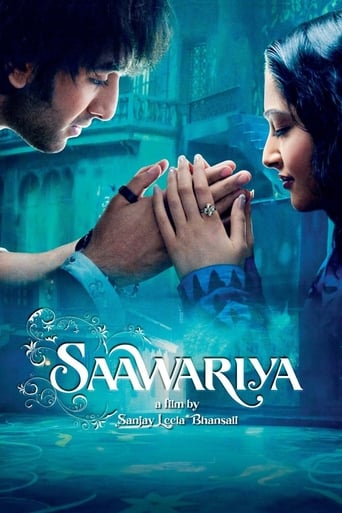
| Saawariya | 2007 | Sony Pictures became the first major Hollywood studio to produce a Hindi film. It struggled against Om Shanti Om at Diwali. |
| Chandni Chowk to China | 2009 | Warner Bros. released it in North America, then called the biggest release of a Bollywood film there. |
| My Name Is Khan | 2010 | Fox Star took worldwide rights (reported ~₹100 Cr). Fox Searchlight released it in the US, opening in 120 theatres. About $23.5M overseas. |
| Baahubali 2 | 2017 | The old way. North American rights sold to Great India Films for over $7M. |
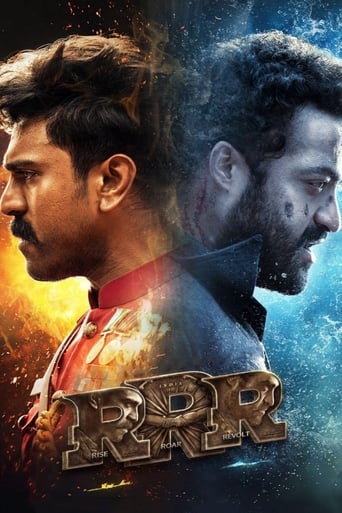
| RRR | 2022 | The old way, and very well done. US by Sarigama Cinemas and Raftar Creations (1,175 theatres). An arthouse re-release with Variance Films. Japan via local distributor Twin, from October 2022, passed ¥2 billion (~$14.75M) after 200+ days. Then a global audience on Netflix. |
| Brahmastra | 2022 | Disney put it on its global slate. Disney released it directly in India and the UK; other markets went through sub-distributors. |
| Ramayana | 2026 | An independent Indian producer hands every territory outside India to one Hollywood studio: about 40 markets in week one, more through November, official studio reporting, IMAX worldwide. |
The main difference is that My Name Is Khan and Brahmastra came through the studios’ own Indian arms (Fox Star and Star Studios). Ramayana is an outside producer’s film, picked up by Sony as a distributor. The fair way to describe it is “the widest Hollywood-studio release of an Indian film”, not “the first”.
What the studio route cost
- No money up front. As reported, Sony paid nothing for the rights. A Baahubali-style sale would have put cash in the producer’s hands before release. Now Prime Focus waits for the overseas run to earn back the marketing (see the worked example above).
- The studio’s share. Whatever the fee is, it comes off the top every week, for as long as the film plays.
- The studio sets the calendar. Ramayana held Diwali week and lost most of its IMAX run to Godzilla Minus Zero after one night.
- Cautious estimates. Studios project Sunday conservatively. Sony’s Sunday estimate was $2.41M; the actual came in at $2.7M.
- Two sets of numbers. India was not part of the deal, so the studio reported India for the first four days as $32.0M while the industry figure was ₹285.2 Cr gross ($30.0M). The studio worldwide figure ($55.7M) was also built on the North America estimate of $12.2M; with the $12.4M actual, the five-day sum is $55.9M.
- Less local muscle. Diaspora distributors still know their audience better. The Gulf, for example, has outperformed the studio’s own figure ($2.48M industry figure vs $2.2M studio).
Will Varanasi follow Ramayana’s route?
S.S. Rajamouli’s Varanasi, starring Mahesh Babu and produced by K.L. Narayana’s Sri Durga Arts, is set for 7 April 2027. It is reported to cost around ₹1,400 Cr (~$147M), has been shot with sequences in the full-height IMAX 1.43:1 shape, and is planned for 120 countries (Pathaan’s 100 was the previous widest). Reports say Rajamouli wants about 50 dubbed versions with real voice actors, not AI, sampling 1,500 voices. The only partner announced abroad is SkyBlue Cinematix of Malaysia, for brand tie-ins, not distribution. No overseas distributor has been announced.
The next big Indian films with a choice to make


Option one: sell it the old way
In March, the Telugu press reported an offer of about ₹160 Cr ($16.8M) for Varanasi’s overseas rights from an unnamed company. The makers have not confirmed it. If true, that would be a record for overseas rights alone, paid before release, with the buyer taking the risk.
Option two: a Ramayana-style studio deal
No upfront money, a studio marketing budget, wider screens, IMAX booked studio to studio, official numbers. For that to beat a ₹160 Cr flat sale, the producer’s share must pass $16.8M. Using the same assumptions as our Ramayana example (a $25M studio marketing spend recouped first, a 12.5–30% fee, 43–50% rentals):
| Step | Producer-friendly | Studio-friendly |
|---|---|---|
| Producer share needed to match the flat sale | $16.8M | $16.8M |
| Plus studio marketing to repay | $25.0M | $25.0M |
| Rentals needed after fee (12.5% / 30%) | $47.8M | $59.8M |
| Overseas box office needed (50% / 43% rental) | ~$95M | ~$140M |
For scale: Ramayana has made about $27M outside India in six days, and RRR’s Japan run alone took about $14.75M over more than 200 days. A studio deal is a bet that Varanasi becomes a worldwide hit, well beyond the diaspora. A flat sale is the safe cheque.
What a studio would bring at Varanasi’s scale
- 50 dubbed versions only pay off if someone can book and market them in 120 countries at the same time. Each language needs its own campaign, while a local distributor usually serves one language and one community.
- IMAX in its full shape means fighting Hollywood for screens in April 2027. Ramayana showed how fast IMAX screens disappear when a bigger studio title arrives. Those screens are won in talks between IMAX and the studios, and the release date decides a lot of it.
- Rajamouli’s audience abroad (RRR’s fans in Japan, the US and beyond) is partly mainstream, not just diaspora. Ramayana’s 71% Asian American US audience shows how hard it still is to go wider.
Still, Rajamouli’s own track record points to a mix. RRR found its biggest overseas success in Japan through a local distributor, months after release, and Telugu films have a strong, well-run distribution circuit in the US. Our guess is a hybrid. A global studio partner for most of the world and for IMAX, with trusted local partners kept where they already deliver, and perhaps a minimum guarantee rather than Ramayana’s reported no-advance deal. If Varanasi signs a studio, expect the announcement well before its trailer, as Ramayana’s was.
What to watch
- Whether Varanasi names a global distributor, when, and whether it gets money up front.
- How many days of IMAX it gets in April 2027, against the Hollywood calendar.
- Ramayana’s second weekend overseas, and the new markets (Indonesia, Mexico, Brazil, Italy). Strong holds in Thailand, Vietnam and the smaller US cities would show that the wider audience is staying, not just trying it once.
- Whether Ramayana’s overseas total heads towards the $57M–$83M range in our worked example.
A wider, more visible release, with the producer carrying the risk
The Sony route did not give Ramayana the biggest Indian opening in North America; Dhurandhar 2 still holds that. It did give it the best Monday, and it made Ramayana a global release: more screens in more places, records in countries Indian films seldom reach, an English-speaking audience, and official numbers on the world chart. The price is not just a fee. With no reported upfront payment, Prime Focus has swapped a safe cheque for a share of the upside, and the overseas run has to grow two to three times from here before that bet pays off. Varanasi is built to travel even further, which makes the same choice bigger for Rajamouli.
TikTok, Instagram and YouTube: what we could see
Sony’s country offices ran the film on their own channels, just as they would for a Hollywood title:
Paid ads, seen first-hand. Before release, the Boxoffy team saw paid Ramayana ads in its own social feeds in the US. Each one sent viewers straight to a ticket-booking page to buy seats. That is how Hollywood sells its films: the ad is there to sell a ticket in one tap, not just to make people aware of the film.
What we still cannot measure
We do not know how much was spent on these ads, how many countries and languages they ran in, or whether they were aimed at non-Indian viewers. Meta’s and TikTok’s ad libraries could not be read by our tools, and no trade report gives these details. If you saw Ramayana ads outside the US, tell us where and in what language.