













An American newsletter argues the box office is dead and that streaming engagement should decide what a film is worth. India already tested that idea. Here, the streamers decided the cinema decides.
Madame Web · Frozen · PAW Patrol: The Movie · K.G.F: Chapter 2 · Toxic · Premalu · Prem Keetanu · Dridam · Vaazha II · Sarvam Maya · Drishyam 3 · Manjummel Boys · Tumbbad · Chhaava · Dhurandhar · Do Patti · Sector 36 · Sikandar Ka Muqaddar
In November 2025 a media and finance writer named Scott Schneider published a newsletter called The Day the Box Office Died, And Hollywood Learned to Love Streaming. It travelled a long way, and it deserved to. The central idea is sharp and mostly right.
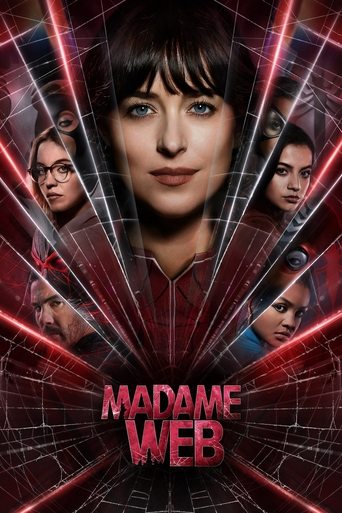
The idea is this. Sony's Madame Web flopped in cinemas. It took $43.8 million in the United States and Canada. Then Netflix put it up on 14 May 2024 and it did roughly 1.16 billion viewing minutes in its first week — out-streaming films that had made three and four times as much in theatres. Bloomberg later reported that Sony had run an internal study asking whether streaming licence fees should be based partly on how a film performs on the platform, instead of only on how it did in cinemas.
The film the whole argument rests on.
Schneider's conclusion: the industry has been pricing streaming deals off the wrong number for decades, and whoever fixes that first makes a lot of money.
That part holds up. The Bloomberg reporting is real and dated 3 November 2025. The Madame Web numbers are real. And the broader point — that a film's life on a platform is not well predicted by its opening weekend — is a serious observation that Indian producers should be thinking about too.
But before anyone in Mumbai or Hyderabad builds a business plan on it, three things need saying. Some of his arithmetic does not survive a check. And more importantly, when you run the same question against Indian numbers, you get the opposite answer.
We checked his claims because that is what we do here. Credit where it is due: the Nielsen table in his piece is transcribed perfectly, all ten titles and all ten figures. His sourcing is fine where he sourced. The problems are in what he modelled and what he did not check.
His headline is a 164 percentage point margin gap: a streaming-first studio at plus 17 percent, a theatrical-first studio at minus 147 percent. Reverse-engineer those numbers and you find a studio charged the full cost of making and marketing twenty films, then credited with only the first of its revenue windows. No streaming licensing. No home entertainment. No television. No international. No library.
Cinema is only about a fifth to a quarter of what a studio film earns across its whole life. So this is not a finding about the film business. It is an incomplete income statement. And it argues against itself: the piece is about how valuable streaming money is, and then the model sets that money to zero.
He sets the streaming studio's marketing line at zero because the algorithm does the work. Netflix's reported sales and marketing spend was $2.92 billion in 2024 and $3.3 billion in 2025. It is booked at platform level instead of per film, which makes it less visible. It is not absent. Comparing a zero to a fully loaded print and advertising line manufactures most of the gap by assumption.
He writes that box office predicts streaming value "with 32 percent accuracy", taken from an R-squared of 0.32. We could not find any published study behind that number. Set that aside, because the bigger problem is the translation — and it happens to be wrong in the direction that helps his case. An R-squared of 0.32 is a correlation of about 0.57. In plain terms that is a fairly strong link, not a weak one. What the figure actually says is that box office and streaming performance move together a good deal without being the same thing. Which is a sturdier argument than the one he made from it.
His most quoted exhibit divides a film's 2024 streaming minutes by its original theatrical gross to get a "multiple". Frozen comes out at 15.7x, PAW Patrol at 151x. But nine of the ten titles are old films, median age about nine years. You are dividing a full year of American television minutes by a worldwide gross earned a decade earlier.
Two of his ten. A 2013 cartoon and a 2021 one.
There are two further problems. The list is picked on streaming minutes, so the theatrical hits that streamed badly are removed from the sample before you start. And seven of the ten sit on their owner's own platform, where no licensing fee is paid at all.
The newsletter's longest section argues that Warner Bros. Discovery's theatrical assets were being written down towards nothing. On 6 October 2026, days before we first published this, Paramount Skydance closed its acquisition of Warner Bros. Discovery at $31.00 a share, around $110 billion — after a bidding war in which Netflix offered $82.7 billion and Comcast also bid. Whatever else is true, three of the largest media and technology companies in the world had just fought each other over a library-and-theatrical asset. That is not what a dying business looks like.
None of this kills his thesis. It just means the thesis has to stand on the Bloomberg story and the Madame Web case, which are enough, rather than on a model that does not work.
Here is where it gets interesting, because the two markets moved in opposite directions.
| Market | 2019 | 2025 | Change |
|---|---|---|---|
| India, all-India gross | ₹10,948 Cr | ₹13,395 Cr | +22.4% |
| US and Canada | $11.36 bn | $8.66 bn | −23.8% |
2025 was India's biggest year ever in rupees. ₹13,395 crore. Hindi alone did ₹5,504 crore, its best ever. So the headline "the box office is dead" is simply not a description of this market.
But we are not going to stop there, because the full picture is less comfortable.
Ormax puts 2019 footfalls at 103 crore and 2025 at 83.2 crore. Average ticket price went from ₹106 to ₹161. That is the whole story of the "record" year.
And there is an honest complication we are obliged to report. Ormax and EY disagree sharply on how bad the attendance decline has been, and the entire disagreement sits in the 2019 base.
| Source | 2019 footfalls | 2024 footfalls | Decline |
|---|---|---|---|
| Ormax Media | 103.0 cr | 88.3 cr | −14% |
| EY / Multiplex Association of India | 146.0 cr | 86.0 cr | −41% |
US admissions fell about 37 percent over roughly the same period. So on Ormax's numbers India held up about twice as well as America. On EY's numbers India did worse. We are telling you both because one of them makes our market look good and we do not get to pick.
What is not in dispute: the revenue divergence is real, and India's screen problem is real but not the one people say. Total screens are actually up slightly, from 9,527 in 2019 to 10,033 in 2025. What has gone is roughly 1,000 single screens since 2018, and screens per million people fell from 7.6 to 6.8. India has 6.8 screens per million against 109 in the United States. Only 3,150 of India's 19,500 pin codes have a cinema at all.
This is the finding that matters, and it comes from the industry's own flagship report rather than from us.
Read that again next to the American story. Sony is reportedly trying to move away from pricing on box office. India's buyers have already moved towards it. And they did it in a record theatrical year — theatrical revenues were up 14 percent in 2025 and digital rights values still fell 8 percent. That is a repricing, not a bad quarter.
Named executives have said the same thing out loud:
One qualification, because precision matters. We looked for published contracts with box-office-linked slabs and did not find any. What is documented is simpler and harsher: platforms now wait for the opening weekend and then pay less. They buy after the fact instead of guaranteeing before it. Functionally that is box-office-linked pricing. Contractually it is just the disappearance of the minimum guarantee.
Yash's Toxic is said to have turned down a ₹150 crore pre-release offer while asking ₹200 crore, then to have been offered ₹30 crore after a weak theatrical run. The same star's KGF: Chapter 2 reportedly got ₹320 crore in 2022.
UNVERIFIED TRADE REPORT The magazine that published it says plainly that no platform or producer confirmed those negotiations. We are repeating it because it is what the market believes, not because it is established. Our argument does not rest on it.
Why can India not follow America here? Because the money is not there. Indian OTT average revenue per user is roughly $0.61 a month — PwC puts it at $7.3 a year. Netflix's global figure is around $12. Netflix India, the premium end of this market, manages about ₹208 a month and is still roughly 10 percent of the Indian streaming video market by value. There are 665 million OTT viewers in India and only 172 to 216 million paid subscriptions, spread across about 143 million households.
At sixty cents a month you cannot outbid a theatrical run. And since February 2025, when JioCinema and Disney+ Hotstar merged into JioHotstar, you do not have to: two of the largest bidders became one company. Ormax's own data shows Netflix and Prime Video went from about 37-41 percent of streaming rights for films with a million-plus footfalls in 2022 to 75-76 percent by 2024. For Hindi films specifically, Netflix's share reached 57 percent in 2025. The South still has four buyers competing. Hindi has effectively one.
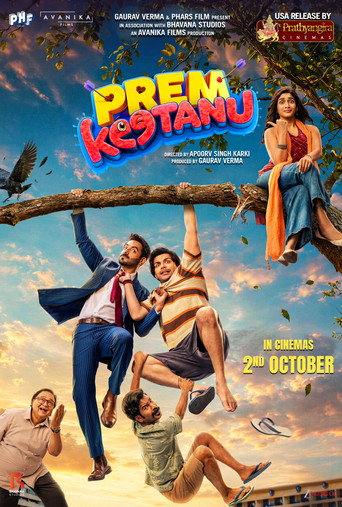
Premalu is a Malayalam film made for about ₹10 crore that did over ₹130 crore. On 22 August 2026 it was removed from JioHotstar — the same day the trailer dropped for its Hindi remake, Prem Keetanu. No official reason was given.
The original came off the platform the day the remake's trailer landed.
Think about what that means. A Malayalam film's Hindi-dubbed streaming audience had grown big enough that the producers of the Hindi remake treated it as a rival. Streaming did not eat the theatrical market here. It built one — and then had to be switched off so the remake could sell tickets.
The remake has not repaid the favour. Prem Keetanu reached ₹1.46 crore by 8 October and has since dropped out of our top ten altogether.
Ormax data, via Shailesh Kapoor: "80 per cent of viewership of Malayalam content on streamers came from outside Kerala, and a large chunk of that was not from the South." PANEL DATA
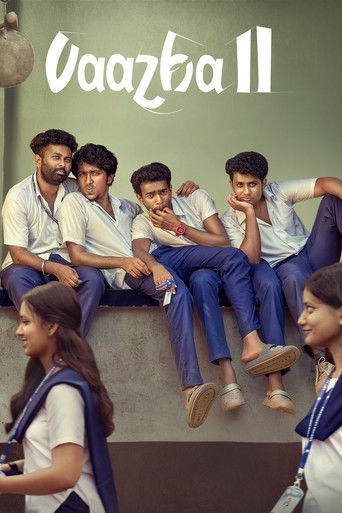
In the first half of 2026, four of the six most-watched non-Hindi Indian films on streaming were Malayalam.
All four Malayalam, first half of 2026. This Drishyam 3 is the Malayalam film, not the Hindi Drishyam: The Conclusion now in cinemas.
Kerala's entire annual theatrical market peaked at around ₹550 crore. And Ormax leaves Malayalam out of its streaming-rights studies altogether, because too few Malayalam films cross a million theatrical footfalls in a year to measure. So an industry too small to show up in the theatrical studies is supplying most of the national non-Hindi streaming chart.
Budget under ₹10 crore, over ₹200 crore worldwide. Disney+ Hotstar acquired it after the theatrical run and then dubbed it into Hindi, Tamil, Telugu and Kannada. A senior streaming executive, quoted in Mint: "If the film hasn't locked a deal before theatrical release and then breaks out at the box office, it is definitely in an advantageous position." The same report puts the going rate at up to 25 percent of box office collections.
₹12.15 crore net in 2018 and a Flop verdict from Box Office India. Six years of streaming later it was re-released and took ₹21.75 crore net in eleven days — more than its entire original run, and India's biggest re-release. Producer Sohum Shah on the original: "I was shocked when I saw the numbers for the first two days; my heart broke."
We have no streaming figure for a 2018 film. We do not need one. The re-release is the measurement of the audience streaming built.
The American piece only shows films where the two numbers diverge. Here is both directions, from the same market and the same year.
| Film | Theatrical | Streaming | Verdict |
|---|---|---|---|
| Chhaava (2025) | ₹500 cr+ net, 3 crore footfalls | 2.2 m views, 5.9 m hours in Netflix debut week | Diverged hard |
| Dhurandhar (2025) | 35.2 m theatrical audience | 21.5 m streaming audience, 65% overlap | Converged |
Ormax's audience work explains why. India has roughly 75 to 90 million people who go to cinemas and do not subscribe to streaming, and another 75 to 90 million who stream and never buy a ticket. A devotional-historical mass hit sells to the first group. Sometimes the two numbers measure the same film. Sometimes they measure two different countries.
Here is the thing that should bother anyone who read the American piece and wanted to repeat the exercise here.
Schneider's argument rests on per-title streaming minutes from Nielsen set against audited per-title theatrical grosses. India has neither.
We can speak to that last one from this week. Our own Monday chart carried Heart of the Beast at ₹0.19 crore because that was the only figure published anywhere. It is ₹0.28 crore on our primary source, which filled the gap a day later — a 47 percent difference on the same film, same day. We corrected it in public. That is the state of the data.
Four things follow, and none of them are the American conclusion.
The digital backstop is gone, and it is not coming back soon. For two or three years a producer could budget against a digital sale. Mukesh Mehta of E4 Entertainment: "A lot of digital platforms feel they are not able to recover the fees paid to acquire movies." Ashwatthama – The Saga Continues had its budget cut from ₹500 crore to ₹200 crore. Director Eswar of 1948 Akhanda Bharat: "Earlier, filmmakers could factor in a strong digital deal while planning their budgets, but that safety net is becoming smaller."
The correction is worse for Hindi than for the South. One dominant buyer versus four competing ones. That is the single most actionable fact in this piece.
Direct-to-OTT did not die, it changed owner. Platforms stopped buying films that were made for cinemas and could not get there. They did not stop making films. In 2024 the three most-watched Hindi films on streaming were all Netflix originals that never saw a cinema at all.
Netflix originals, 2024. None of them opened in a cinema.
And the theatrical window came back. It contracted from eight weeks to six after COVID and has returned to eight for Hindi films. South Indian films average about four. There is no binding agreement — PVR INOX went to the Bombay High Court to block an early OTT release of Bhool Chuk Maaf. PVR INOX's Sanjeev Kumar Bijli names the real problem: "The perception among consumers is still that films arrive on OTT within two to three weeks." The window is back. The audience does not believe it.
America is debating whether streaming engagement should set a film's price. India's streamers already answered: they will not pay for a film the cinema did not validate. In Hollywood the theatre is becoming one window among many. In India it has become the price discovery mechanism for every window that follows.
On sources. Theatrical and admissions data from Ormax Media's annual and half-yearly box office reports. Industry totals, rights values and screen counts from the FICCI-EY Media & Entertainment Report 2026 and the EY / Multiplex Association of India exhibition study. Streaming economics from PwC's Global Entertainment & Media Outlook 2026-30 and FICCI-EY. Streaming viewership from Ormax StreamView and Netflix's weekly Top 10. Executive quotes as published by exchange4media, Mint, Business Today, Bollywood Hungama and The Hans India. US figures from Box Office Mojo, The Numbers, Nielsen and Netflix shareholder letters.
Posters and film metadata from The Movie Database (TMDB). This product uses the TMDB API but is not endorsed or certified by TMDB.
Where two credible sources disagree we have given both. Figures we could not verify are tagged as unverified and the argument does not rest on them. Scott Schneider's original newsletter, The Day the Box Office Died, is worth reading in full — this piece exists because it was worth arguing with.
Boxoffy · BCM 12 · How we calculate